The Book of Romans Chapter 9Chapter Overview: In this chapter St. Paul, after strongly declaring his love and esteem for them, sets himself to answer the grand objection of his countrymen; namely, that the rejection…

The Book of Romans Chapter 9Chapter Overview: In this chapter St. Paul, after strongly declaring his love and esteem for them, sets himself to answer the grand objection of his countrymen; namely, that the rejection…
Is Judas a problem for your theology? He can be a problem if some of your beliefs come from tradition and not from the Scriptures. In this article I would like to discuss the full…

One of the difficult elements of Calvinism is that when you logically work through the doctrine of predestination you ultimately come to the conclusion that God caused Adam to sin or that He predestined the…

I recently was listening to a series of teachings by a Calvinist speaker that I enjoy when he began to discuss praying evangelicstically for the lost. He asserted that Calvinist can truly pray for the…

Calvinism and TULIP go hand in hand. When you think of the one, it’s rather hard not to think of the other. However, certain qualifications are in order. “The truth is,” says Michael Horton, “there…

Over the last week I have been in a discussion over soteriology, which started with the request to define free will. Free will can be a hard concept to define because there are very different…

God’s relationship with not only His universe but also the creatures whom He created in His own image has been debated, fashioned, and refashioned throughout the history of the Church. From what one may gather,…

In 2009 Time magazine ran a story entitled “10 Ideas Changing the World Right Now” (Thursday, March 12). Not surprisingly, the top two spots were occupied by new trend setting thinking on career/workplace and life…
William Rowe’s book asks the question: Can God be Free? First, he gives an interesting historical introduction to the subject, covering the views of Gottfried Leibniz, Samuel Clarke, Thomas Aquinas and Jonathan Edwards; meanwhile he…
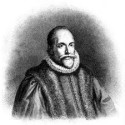
The following quotes are taken from Eef Dekker’s Was Arminius a Molinist? The Sixteenth Century Journal, Vol. 27, No. 2 (Summer, 1996), pp. 337-352. Arminius: The knowledge of God is a faculty of his life, which…
There exists a false charge that Arminius’ theology, when consistently maintained, renders one an Open Theist. This charge is merely a rhetorical one, synonymous with the insistence that the only consistent Calvinism is hyper-Calvinism, or…
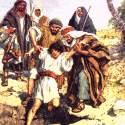
Genesis 50:15-21 When Joseph’s brothers saw that their father was dead, they said, “What if Joseph bears a grudge against us and pays us back in full for all the wrong which we did to…
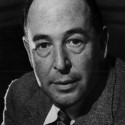
For years now I have been insisting that the main reason I am not a Calvinist (or any kind of divine determinist) is that, taken to its “good and necessary consequences,” Calvinism makes God morally…
Please see below or click on the attachment to view Charles Edward White, “Does God Call All the Shots?” Light and Life (July/August 2003), pp. 29-31. Does God Call All the Shots? By Charles Edward White …


Hearty thanks go to publishers Wipf & Stock for re-publishing theologian Emil Brunner’s three volume Dogmatics which was originally published in English by Lutterworth Press in England and subsequently by Westminster Press in America. At…
Please click on the attachment to view Charles Edward White, “John Calvin’s five-point misunderstanding of Romans 9: An Intertextual Analysis,” Wesleyan Theological Journal 41 (Fall 2006) 28-50.

Please click on the link to view Ron Callaway, “The Omniscience of God and Open Theism” Integrity 3 (2006) 111-139.
They may make strange bedfellows but on one issue some Calvinists, many atheists, and most process theologians agree: there is no real difference between “doing evil” and “permitting evil.” For them, the traditional claim of…
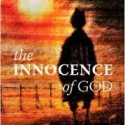
In Udo Middelmann’s The Innocence of God, he grants us biblical evidence advocating the truth that God is innocent of the tragedies and evil experienced by and among fallen human beings. God has neither decreed…