written by by Henry Knight III A common criticism of Wesley’s theology, especially from those of a more Calvinist inclination, is that it grounds salvation not on grace but human decision. This is, to put…
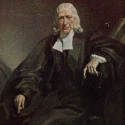

written by by Henry Knight III A common criticism of Wesley’s theology, especially from those of a more Calvinist inclination, is that it grounds salvation not on grace but human decision. This is, to put…

Author and scholar H. Ray Dunning answers an elementary yet profound question affecting all people seeking God’s forgiveness and grace in their lives: Are we saved by grace? The Apostle Paul repeatedly stresses the centrality…
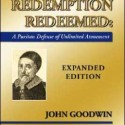
Now available here online, John Goodwin’s Redemption Redeemed may be the best defense of Arminianism ever written. Published in 1651 by the Arminian Puritan John Goodwin (1593-1665), it is written in seventeenth century English with…
How Does Grace Work in Arminian-Wesleyan Theology? by Eric Landstrom How grace is understood to work is the key to unlocking any Christian theology or theological tradition. As such, I thought it beneficial to unpack…

Please click on the attachment to view Glen Shellrude, “The Freedom of God in Mercy and Judgment: A Libertarian Reading of Romans 9:6-29”, Evangelical Quarterly 81.4 (2009), 306–318. Here is the author’s abstract: Romans 9:6-26…

Please click on the attachment to view Leo G. Cox, “Prevenient Grace-A Wesleyan View,” Journal of the Evangelical Theological Society 12 (1969): 147-60. Cox. Prevenient Grace

Please click on the attachment to view Robert Rakestraw. “John Wesley as a Theologian of Grace,” published in Journal of the Evangelical Theological Society 27:2 (June 1984): 193-203.
This exposition discusses the earliest, historical beliefs of the Arminian theological tradition regarding the effects of the fall upon man, the nature of the will of man and the mode of grace in salvation. The…
The sixth chapter of John’s Gospel is either a monster text in support of Calvinistic predestination, or else a fountain of revelation on some other spiritual truth. Admittedly, exegesis of this chapter by Arminian scholars…
This article originally appeared in the Evangelical Journal 9 (1991) 27-39, and was taken from the website of John Mark Hicks, specifically this page: http://johnmarkhicks.files.wordpress.com/2008/12/righteousness-of-saving-faith.doc. Please click on the attachment to view John Mark Hicks,…

The Awakening of God to Our Sins written by SEA member, Roy Ingle Salvation is of the Lord. We affirm that but let us consider that truth played out in our lives. When I was…
What Arminians Find Offensive About the “Doctrines of Grace” written by SEA member Roy Ingle Very often I read or hear Calvinism referred to as “the doctrines of grace.” I am not sure when or…
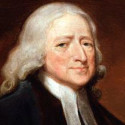
John Wesley’s Experimental Religion and Evangelism in a Postmodern Age
written by William Brennan (PhD cand)
EVANGELISM AND THE POSTMODERN CONDITION
That postmodernity is a hazy concept, ill-defined and worse-employed, is by now a sad truism, only worsened by its many variants and broad influence over multiple areas of contemporary life and thought. It must be acknowledged, though, with however much reserve, that there is such a thing as postmodernity which is not only pervasive within the philosophy, ethics, and aesthetics of our day, but which also has deep roots at the popular, cultural level. And though the Church need never capitulate to predominant cultural models, she must ever ask: how will we preach the Gospel of Jesus Christ to this generation? When this question is asked with reference to this present generation, the phenomena of cultural postmodernity—however it is to be more precisely defined—cannot be ignored.
Recently a group of non-Calvinist Southern Baptists wrote and signed “A Statement of the Traditional Southern Baptist Understanding of God’s Plan of Salvation.” I certainly have no objection to a group of non-Calvinists pushing back…
“Prevenient Grace: Why It Matters”
by Roger Olson
This is a follow up to my earlier post regarding the statement of the traditional Southern Baptist view of salvation by certain Southern Baptist non-Calvinist, non-Arminian pastors and theologians. If you have not read that post, go back and read it before reading this one. Here I am picking up where I left off there and taking some comments subsequent to it into account.
Also, here, I am not delving into the debate between Calvinists and Arminians over the nature of prevenient grace as irresistible or resistible. That’s certainly interesting and much discussed in evangelical and Baptist circles, but here I am simply talking about prevenient grace AS IT IS BELIEVED BY BOTH CALVINISTS AND ARMINIANS.
The Practical Implications of an Unlimited Atonement written by SEA member, Roy Ingle On a more personal level, what are the implications of an unlimited atonement when it comes to ministry? I believe there is…
Is Faith a Work?
This post is written by SEA member, Roy Ingle
In Romans 4:4-5 we read the following:
4 Now to the one who works, his wages are not counted as a gift but as his due. 5 And to the one who does not work but believes in him who justifies the ungodly, his faith is counted as righteousness.
By Ben Henshaw. From http://arminianperspectives.wordpress.com/2012/09/05/dr-brian-abasciano-on-the-conditionality-implied-in-romans-916-and-its-connection-to-john-112-13/, the original post, where comments can be made. “So then it depends not on human will or exertion, but on God, who has mercy.” Romans 9:16 (ESV) “But to all…
Though not a member of SEA, Rev DeCrastos gives an interesting illustration regarding God’s desire to have a relationship with His creation. THE TOYMAKER by Rev. DeCrastos It had been a long day, and the…
The Divine Proposal: Grace the Bridegroom, Faith the Bride This post is written by SEA member Pastor Christopher C. Chapman [Editor’s note: The author speaks of faith as a sort of work, using the language…