From the video’s YouTube page, where the video may also be accessed in addition to here: This is a lecture by Dr. A. Chadwick Thornhill of Liberty University concerning the Jewish roots of Paul’s election theology.…

From the video’s YouTube page, where the video may also be accessed in addition to here: This is a lecture by Dr. A. Chadwick Thornhill of Liberty University concerning the Jewish roots of Paul’s election theology.…

From the video’s YouTube page, which may be accessed here: Why did the church need the 18th century Methodist movement? In today’s Seven Minute Seminary, Dr. Ryan Danker explains the relationship between Anglicanism, Puritanism, and…
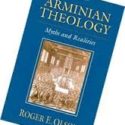
BEN: On p. 55, you talk about Wesley’s treatise on divine sovereignty compared to Calvin’s view. Would you say that while Wesley agrees with Calvin that God is sovereign, absolutely so, and could do what…
BEN: Roger you seem to spend a good deal of effort trying to say that Arminian theology could rightly be called a form of Reformed theology, though one distinct from high Calvinism at various points.…
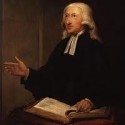
Please click on the link to view Randy L. Maddox, “Theology of John and Charles Wesley,” in T&T Clark Companion to Methodism, 20–35. Edited by Charles Yrigoyen, Jr. New York: T&T Clark, 2010.

Please click on the link to view this opinion piece that appeared in The New York Times on 9/12/16 by a professor of history and a co-director of the Berkeley Center for the Study of…
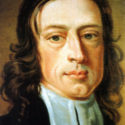
These are 22 questions the members of John Wesley’s Holy Club asked themselves every day in their private devotions over 200 years ago. Interesting how they are still relevant today. 1. Am I consciously or…
Please click on the link to listen to the interview. Here is the Reformed Forum’s description of the interview from the interview’s web page, which also has a bibliography of Dr. Stanglin’s works: Dr. Keith…
*First read my first six posts in this series. They set forth my fundamental “principles” for living and thinking. *Now continues a second part of this series; this series is about my reasons for being…
One of the most frustrating aspects for the followers1 of Jacob Arminius’ teachings on God’s nature, character, salvation — including grace, election unto salvation, justification and conditional perseverance with an accompanying final or ultimate salvation…
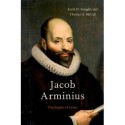
BEN: What are the four testimonies that can bolster assurance of salvation, according to Arminius? In what sense is clear belief in Christ as savior a basis for assurance of salvation? KEITH: Arminius delineates what…
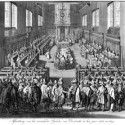
This lecture was given on March 31, 2016 at the Junius Institute for Digital Reformation Research’s Colloquium entitled, “The Leiden Synopsis Purioris Theologiae (1625) and Theological Disputation in the Era of Orthodoxy” held at Puritan Reformed Theological Seminary…
I came across this interesting statement wrote by James (or Jacobus) Arminius, the founder of Arminianism: “After the holy scriptures, I exhort the students to read the Commentaries of Calvin… for I tell them that…

A Theological Dirty Word Recently I’ve noticed that, over the past century, Arminians have increasingly used the word “synergist” to describe themselves, rather than seeing it as a negative epithet, as most Christian theologians have.…
BEN: There is also a strong emphasis early on in the book on what is called the ‘intellectualist’ approach to the nature of God, which is to say that God’s knowledge is given priority over…
BEN: Jacob Arminius seems to be a frequently misrepresented theologian, whose works have been neglected, and lack readily accessible translations into English from the Latin and Dutch. To what would you attribute this neglect, and…
Of late there has been an attempt, rightly in my view, to clear away a lot of misconceptions and in fact misrepresentations of Arminian theology, including the misrepresentation of Arminius himself as either a Pelagian…
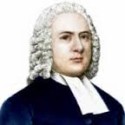
English Baptist and theological hyper-Calvinist John Gill (1697-1771), in his work, The Cause of God and Truth, is found guilty of not only committing numerous logical fallacies regarding the writings of the early Church fathers…
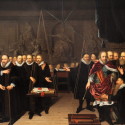
Someone asked whether one should refer to classical Arminianism as Reformed Arminianism (some prefer Reformation Arminianism). Arminian Baptist James Leonard commented to me personally that his hope is that people will not think that we…
Introduction When asked the difference between Arminianism and Pelagainism, I always have trouble knowing exactly where to start. It is a bit like being asked about the difference between Republicanism and Monarchy: the simple answer…