
Arminius’ mild-mannered temperament is noted in the pages of history from both his friends as well as his foes: The personal character of Arminius was irreproachable; and he attracted the esteem and applause of his…
History
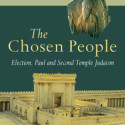
Ben Witherington and Chad Thornhill on *The Chosen People: Election, Paul and Second Temple Judaism*, Part 8: Conclusions
I hope to have demonstrated the value and necessity of placing Paul’s election language back in its original context, which was a decidedly Jewish one. As we reviewed the Jewish literature, we discovered a view…
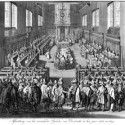
Life after Arminius: The Arminians and Dordt
After the death of Arminius, anti-Arminian Calvinists become emboldened, which merely attests to the place of prominence granted Arminius within his own lifetime: with Arminius still alive, the anti-Arminians find lording their doctrines over the…
Ben Witherington and Chad Thornhill on *The Chosen People: Election, Paul and Second Temple Judaism*, Part 7
BEN: In terms of the modus operandi of this book, one of the basic approaches you take is to argue that if an idea is not found elsewhere in early Jewish literature, then it is…
Ben Witherington and Chad Thornhill on *The Chosen People: Election, Paul and Second Temple Judaism*, Part 6
BEN: The discussion in chapter six about the heavenly tablets in Jubilees and their relationship to the book of life and the book of destruction is especially interesting in light of the discussion in Revelation…
Ben Witherington and Chad Thornhill on *The Chosen People: Election, Paul and Second Temple Judaism*, Part 5
BEN: In Chapter 5 it becomes clear that early Jews mostly thought that election was conditional, and the condition was faithfulness to the Mosaic covenant and its Law. You quote deSilva approvingly as follows “fidelity…
Ben Witherington and Chad Thornhill on *The Chosen People: Election, Paul and Second Temple Judaism*, Part 4
BEN: Chad in this chapter you talk about the ‘limited non-nationalistic understanding of election’ (p. 135) as permeating early Jewish literature. By this I take you to mean that Jews did view themselves as God’s…
Ben Witherington and Chad Thornhill on *The Chosen People: Election, Paul and Second Temple Judaism*, Part 3
BEN: One of the greatest difficulties to overcome in trying to get people to see the Bible with ancient rather than modern assumptions, is the problem of modern radical individualism warping the way we read…
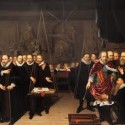
The Full Original Act of Remonstrance in English and Dutch
Luis Henrique asked the director of the Arminius Instituut of the VU University of Amsterdam, Bert Dicou, to translate portions of the original Act of Remonstrance (1610) that are not normally translated. They have been combined…
Ben Witherington and Chad Thornhill on *The Chosen People: Election, Paul and Second Temple Judaism*, Part 2
BEN: One of the things that surprised me about your response about the covenants is that it does not reflect the work of various OT scholars, like Meredith Kline, who made quite clear how similar…
Remonstrance of 1610 (Audio)
To listen to an audio of the Remonstrance of 1610 in English, visit this post at the site of Simon Kittle.
Ben Witherington and Chad Thornhill on *The Chosen People: Election, Paul and Second Temple Judaism*, Part 1
One of the most important books I have read in a long time in regard to the theology of election in Paul’s letters is the recent book by Dr. Chad Thornhill of Liberty entitled The…
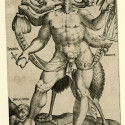
The Making of a Classical Arminian
The lovely picture to your right is a Dutch-Calvinist work naming Arminianism a five-headed, four-footed, part man, part beast, monster. The five-fold head of this monster represents the head of Avarice, Deceit, Riot (or Sedition),…

Understanding the Controversy of Former Supralapsarian Calvinist Arminius
The title of this post is a bit controversial in itself: Was Arminius a supralapsarian Calvinist at one time? That is a possibility. I believe that he was a supralapsarian. At least twice in Arminius’…
The Motive for Arminius’ Theology
What we must first understand about Arminius’ theological thought process is his positional biblicistic framework. Calvinist theologian Richard A. Muller confesses as much: “Had Arminius been a biblicistic pietist,” i.e., a devotional writer, “promulgating a…
The Unjust Persecution of the Arminians
After the death of Arminius in 1609 the Remonstrants petition the States for protection and safe conduct. Why? Why would the early Arminians fear for their physical safety? By the era of Arminius’ death in…
The Five Points of Arminianism
If not for the early Dutch Reformed Arminians rejecting five tenets of Calvinistic ideology, there would be no TULIP today, as TULIP is merely a reaction to Arminian theology. After the death of Arminius, in…
Arminian and Baptist: An Interview with Matt Pinson
Please click on the link to access Arminian and Baptist: An Interview with Matt Pinson.
Arminius for Everyone
Often historical information regarding sixteenth-century Reformed theologian Jacob Arminius (1559-1609) is weighed down by theological jargon too complicated and uninteresting for the average lay-reader. Too much is assumed by the respective authors and too much…
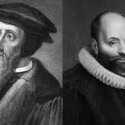
James Leonard, “Why I’m an Arminian and Why Calvinism Is Dominating the Evangelical Book Market”
On our outreach Facebook discussion page, James Leonard, one of our vice presidents, briefly addressed the questions, “Why I’m an Arminian?” and “Why Calvinism is dominating the evangelical book market?” We thought his answers worth…
Recent Posts

Roy Ingle, “What Scripture Says, God Says”

How Do You Interpret Isaiah 45:7?

Video: David Pallmann, “A Critique of Eternal Security Part 1: The Case For Eternal Security Considered”

William Burt Pope, “Divine Attributes Related to the Creature Part 5: The Goodness of God”