Steve Hays and I have been discussing choice and determinism. However our last two posts have shown a significant increase in talking past each other rather then moving deeper into the topic. While I could…


Steve Hays and I have been discussing choice and determinism. However our last two posts have shown a significant increase in talking past each other rather then moving deeper into the topic. While I could…
Over the years, since I “came out” publicly among evangelicals as an Arminian (beginning with my 1999 Christianity Today article “Don’t hate me because I’m an Arminian”) Ihave received many books and manuscripts about Calvinism…
Please click on the link to view Phillip A. Gray, “Foreknowledge and Freedom in the Fourth Gospel: Another Look at Open Theism.”

The following quotes are taken from Eef Dekker’s Was Arminius a Molinist? The Sixteenth Century Journal, Vol. 27, No. 2 (Summer, 1996), pp. 337-352. Arminius: The knowledge of God is a faculty of his life, which…
[Editor’s note: This post comes from a Molinist perspective. SEA does not specifically advocate Molinism, but allows members to hold to either divine simple foreknowledge or Molinism.] This post is a response to Mark Linville’s…

Please click on the link to view Ron Callaway, “The Omniscience of God and Open Theism” Integrity 3 (2006) 111-139.

Here are some helpful comments Austin Fischer made in the comment thread of his recent post “Young, Restless, No Longer Reformed a Year Later: Calvinism (Still) Isn’t Beautiful” at his blog (the post can be found on this…
In “The Softer Face of Calvinism” (Christianity Today), it is argued that, rather than appealing to theologians to understand Reformed theology, one should use the Reformed confessions and creeds. The confessions, therefore, form an important…
Robert E. Picirilli, “Toward a Non-Deterministic Theology of Divine Providence,” Journal for Baptist Theology and Ministry (Spring 2014) Volume 11.1, 38-61. (The original article and the entire journal issue in which it appeared may be found here.)…

In Part 1 of this series on the theology of Charles Hodge I claimed that Hodge remains the “gold standard” for Reformed theology for most American Calvinist evangelical theologians. Again, as I said there, that…
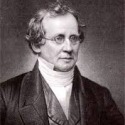
First of all, who cares what Charles Hodge said about anything? Well, many conservative evangelicals care—whether they know it or not. Charles Hodge was and remains such an influential 19th century theologian that I included…
From the video’s YouTube page: “Dr. Charles Gutenson here outlines John Wesley’s order of salvation—that work of God which begins with prevenient grace and ends with glorifying grace.” A brief bio from Seedbed on Dr.…
Please click on the link to view “Early Church Fathers on the Freedom of the Will and Romans 9.” The early church resoundingly affirmed the liberty of the will, in spite of the well-known philosophical option…
Please click on the link to view Lydia McGrew, “Before the Mountains Were Brought Forth: A Defense of Divine Timelessness,” The Christendom Review: A Journal of the Philosophia Perennis 6.1 (2014).
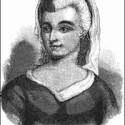
The following is from a letter written by Susanna Wesley to her son John. This quotation has been taken from John Kirk, The Mother of the Wesleys: A Biography (London: Henry James Tresidder, 1864), 284-86. Explanatory…

Beware of Stealth Calvinism! Several times here I have expressed concern that some Calvinists are attempting to take over churches by stealth. I frequently hear from church members (mostly Baptists but occasionally also Pentecostals and…

FAQ: Doesn’t Arminianism lead to open theism? A: Open theists and Calvinists both think so, but classical Arminianism don’t think so. According to classical Arminianism, God knows the future exhaustively–as already settled in his own mind although…
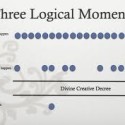
Description of Middle Knowledge The twin foundations for middle knowledge are the beliefs that the bible teaches libertarian free will and the bible teaches God’s providence over all things. Middle knowledge reconciles the two by…
Traditionally, Libertarians have guarded the definition of free will very closely. Libertarians don’t allow compatiblists to remove essential aspects from the concept of free will, like say, reducing ability to hypothetical ability. But while we…
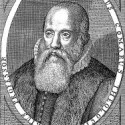
The following quote is from the Works of James Arminius, 1875 London Edition, Examination of Gomarus on Predestination. (Volume 3. p 547-549) Arminius’ Examination of Gomarus is only in the 1875 edition and is therefore…