Abstract: In this third installment, John Wesley’s eschatology is surveyed from his Oxford period in the 1720s to his mature thoughts in the 1780s. It is further shown that the early Wesley was an amillennialist…
Abstract: This second installment in a six-part series examines how early Methodists understood Methodism as an eschatological movement, called to help usher in the millennium through the proclamation of salvation and holiness. Wesley’s 1739 Journal…
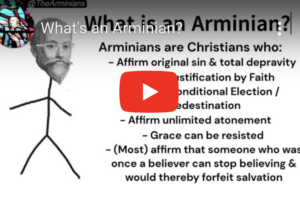
From the description: In this video we look at John Wesley’s 1770 tract, “What is an Arminian?”, to conclude that an Arminian is a Christian who: – Affirms the doctrines of original sin & total…
[This post first appeared at GospelEncounter.wordress.com] “For what can be known about God is plain to them, because God has shown it to them.” – Romans 1:19 ESV “Or do you presume on the riches of his kindness…
[This post first appeared at GospelEncounter.wordpress.com] “Such is the freedom of his will; free only to evil; free to “drink in iniquity like water;” to wander farther and farther from the living God, and do…
Abstract: This second installment [you can see the first one here] examines how early Methodists understood Methodism as an eschatological movement, called to help usher in the millennium through the proclamation of salvation and holiness.…
Abstract: This is part one of a five-part study on John Wesley’s eschatology. This opening article recounts the development of eschatology in England from the Protestant Reformation to the Evangelical Revival in the eighteenth century.…
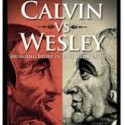
Please click on the link below to read an excerpt from Calvin vs. Wesley: Bringing Belief in Line With Practice by Don Thorsen, available online by permission at the Ministry Matters website: Introduction: Christians Live More…
This is the conclusion of an article begun in the last issue. It is an adaptation Tom Kiser made of John Wesley’s description of Christian perfection. By this fruit you will recognize him: he loves…
H. Ray Dunning is the professor of theology at Trevecca Nazarene College in Nashville. He was commissioned to produce a systematic theology in the Wesleyan tradition that is true to the doctrinal standards of the…
Aaron Jacob Smith (1887-1960) was brought up in a Christian home and professed to have been converted in 1907. Five years later he attended college at University Park, Iowa and professed to be sanctified. He…
Our Scripture lesson is found in Ephesians 5. I am reading only one sentence, but it goes through four verses. Beginning with 5:18, “And be ye not drunk with wine, wherein is excess; but be…
Now faith is the substance of things hoped for, the evidence of things not seen (Hebrews 11:1). The doctrine of salvation by grace through faith is the most important of all New Testament teachings. It…
“The Spirit himself beareth witness with our spirit, that we are the children of God” (Romans 8:16). That the Old Testament saints were justified by faith is clearly stated in Hebrews 11. While the faith…
The Bicentennial Edition of the Works of John Wesley, in the process of being published by Abingdon Press, contains 13 sermons not found in the 14 volume Thomas Jackson edition. This sermon was written in…
Please click on the link to read W. Stephen Gunter, “John Wesley, a Faithful Representative of Jacobus Arminius” (2007), available online in PDF from The Oxford Institute of Methodist Studies: JOHN WESLEY, A FAITHFUL REPRESENTATIVE…
Please click on the link to read Thomas A. Noble, “Grace and Election in the Theology of John Wesley and T.F. Torrance”, available in PDF online from Participatio: Journal of the T. F. Torrance Theological…
Please click on the link to read Dan Sheffield, “John Wesley on embracing neighbours and strangers”, available from the author’s blog (and also includes a link to his paper, “Genuine Christianity: Wesleyan Theology and Praxis…
This is a sermon by John Wesley on the manner in which someone corrupts the Word of God in their preaching. As Christians, we ought to approach the Bible with humility and passion. http://www.godonthe.net/wesley/jws_136.html