Calvinists, who deny that salvation can ever be lost, reason on the subject in a marvelous way. They tell us, that no virgin’s lamp can go out; no promising harvest be choked with thorns; no…
Calvinists, who deny that salvation can ever be lost, reason on the subject in a marvelous way. They tell us, that no virgin’s lamp can go out; no promising harvest be choked with thorns; no…
Dr. Seng-Kong Tan serves at Biblical Graduate School of Theology. This article was previously published in the Journal for Christian Theological Research 7 (2002). [To view the footnotes on this page, scroll down to the bottom of…
[To view the footnotes on this page, scroll down to the bottom of the page. Clicking on the hyperlinked footnotes will take you off site to the notes in the original article location.] Introduction When…
Please click on the link to view . Irv Brendlinger, “John Wesley and Slavery: Myth and Reality” (2006). Faculty Publications – College of Christian Studies. Paper 116 (2006) http://digitalcommons.georgefox.edu/ccs/116.
[To view the footnotes on this page, scroll down to the bottom of the page. Clicking on the hyperlinked footnotes will take you off site to the notes in the original article location.] Introduction Mildred…
This article is an extract of my chapter “Early Methodist Christology After the Wesleys” in Methodist Christology: From the Wesleys to the Twenty-First Century, eds. Jason E. Vickers and Jerome Van Kuiken. Foundary Books, 2020. [To…
[To view the footnotes on this page, scroll down to the bottom of the page. Clicking on the hyperlinked footnotes will take you off site to the notes in the original article location.] Introduction Studies…
Cowman Lectures, 2021. Seoul Theological University. [To view the footnotes on this page, scroll down to the bottom of the page. Clicking on the hyperlinked footnotes will take you off site to the notes in…
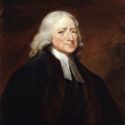
Cowman Lecture, 2021 Seoul Theological University, South Korea Abstract: The doctrine of justification is usually associated with John Wesley after his evangelical conversion in 1738. Few people know what Wesley believed about justification before that…

Please click on the link to view Andrew V. Sullivan, “A Methodist Before Methodism: The Wesleyan Reception of James Arminius.”
Abstract: After looking at Wesley’s Journal, sermons, and NT commentary in Part One to discern his views on Spirit baptism. In Part Two, we survey Spirit baptism as the standard of spirituality and move on…

Abstract: In this two-part study John Wesley’s understanding of the baptism with the Holy Spirit is examined in detail. The phrase has been linked to a second, post-justification blessing in Holiness and Pentecostal theology. The…
Abstract: John Wesley is widely recognized for his contributions to the subject of soteriology (doctrine of salvation). Yet, his doctrine of creation serves as a backdrop and context for his teachings on salvation, sanctification, and…
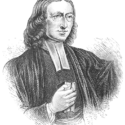
Abstract: Wesley’s religious experience at Aldersgate remains the most famous and debated event in his life. Scholars disagree on what the experience meant to Wesley at the time and over his lifetime. This article reviews…
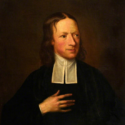
Abstract: This article explores how the Pietist impulse, in both its “churchly” and “radical” forms, profoundly shaped the theology and spirituality of John Wesley. Churchly Pietists such as the Moravians, as well as the radical…
Please click on the attachment to view Andrew Sullivan, “Harmony of the Arminian Faith: A Proposal to the Global Methodist Church.” John Wesley left the people called Methodist a trio of doctrinal…
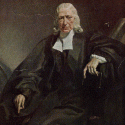
Abstract: The problem of human suffering has conflicted many people. The eighteenth century was no different, for it was rife with suffering and death, with the average life span a short 37 years. John Wesley…
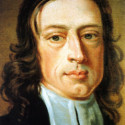
Abstract: This article documents John Wesley’s earliest interactions with the Moravians. Wesley enjoyed a cordial relationship with the Moravians between 1735-1739. Unfortunately, due to personality clashes and growing theological differences, Wesley’s relationship with the Moravians…
Abstract: The influence of our Christian traditions upon our reading of scripture is deep and profound, even working at a subconscious level. This article demonstrates this truth by examining the role that tradition played in…
Abstract: This article explores John Wesley’s inclusivism regarding the future salvation of non-Christians, like Jews, Moslems, and other religious people. Reflecting on Acts 10:35, Wesley became convinced that the foundation for future salvation was not…