Calvinists distinguish themselves from other Christians by calling themselves “Reformed.”* This is due in part to Calvinists envisioning themselves as the living legacy of the Protestant Reformation. They also see “Calvinism” as the true gospel,…


Calvinists distinguish themselves from other Christians by calling themselves “Reformed.”* This is due in part to Calvinists envisioning themselves as the living legacy of the Protestant Reformation. They also see “Calvinism” as the true gospel,…
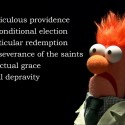
On the one hand, Calvinists will often argue (using passages like Romans 9:20-21) that mankind has as much control over how he believes and behaves as a piece of clay has over its own shape,…

Christ’s propitiation deals with the blood covenant and atonement of Calvary, in terms that God has accepted what Jesus did at Calvary to effectively atone for the sins of all mankind. It is addressed at…

Prophecy involves divine omniscience. It’s supernatural because it’s the ability of God to know beforehand what free creatures are going to do. If prophecy was instead only a matter of God knowing what He unilaterally…
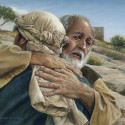
The parable of the Prodigal Son of Luke delivers some interesting theology. It (a) corrects the Calvinist concept of spiritual death to mean separation—not a corpse in a tomb, (b) shows how everyone is 100%…

SEA members Dan Chapa, Chris Bastedo, and Richard Coords discuss Ephesians 1, election, and predestination from an Arminian perspective. The video below may also be accessed on YouTube at https://youtu.be/_zX3iTzejms.

One way that Atheists assail Christianity is by asking rhetorical questions like: “Given all of the evil and misery in this world, if there really was a God, how could he be good?” So, then,…

SEA members Dan Chapa and Richard Coords discuss the second part of Romans 9, regarding Pharaoh, God as a potter, and vessels of mercy and wrath. The video below can also be accessed on YouTube…

Does Calvinism lead to pride? In other words, in Calvinism’s doctrine of Unconditional Election, if one believed that God chose them from eternity—over their neighbors—how might that type of thinking tend to affect them, emotionally…

Preterition is the Calvinist doctrine which addresses God’s relationship with the alleged “non-elect,” who are unconditionally omitted from God’s salvific will.440 These would be those who were not chosen to receive God’s “Irresistible Grace,” but…
SEA members Dan, Richard Coords, and Christopher Bastedo discuss election in Romans 9. They discuss the national election found in the Old Testament texts Paul cites in Romans 9 and the way Paul applies them…
Calvinists often assume Calvinism in order to prove Calvinism, which is “Circular Logic.” Circular Logic involves presuppositional thinking. As an example, while it would be perfectly fine for two Christians who are debating Calvinism to…

A presupposition is something you carry into any discussion, dealing with what you already presuppose to be true, and if you’re presupposition is accurate, then there is no problem, but if it’s false, then you…

Predestination is a biblical term, referring to anything that God, in advance, has purposed and planned to bring about. Here are some examples found in the Bible: Luke 22:22: “‘For indeed, the Son of Man…
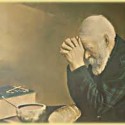
Prayer is communicating with God, and prayer changes things. It changes both us and God. It changes us because it centers our attention around Him and it changes God because God is an emotional Being…

Is it a “work” to continue believing in Christ? What do Calvinists believe? You were saved by the grace of God through faith. So, are you now kept saved through the rest of your life…
Knowing that evil would come to pass, why didn’t God prevent it? Calvinists use that question to infer determinism, meaning that God must have secretly wanted evil, or else otherwise He could have stopped it,…

Is the Calvinist concept of God the greatest conceivable Being? William Lane Craig responded to a Muslim’s question and concluded that Islam’s conception of God was not the greatest conceivable Being and so, naturally, one…
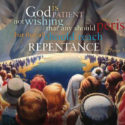
Throughout the scriptures we see evidence of God’s patience and long suffering with mankind: Nehemiah 9:30: “For many years you were patient with them. By your Spirit you warned them through your prophets. Yet they…

Why did Jesus speak in parables? Jesus answers by saying: “Therefore I speak to them in parables; because while seeing they do not see, and while hearing they do not hear, nor do they understand”…