BEN: There is also a strong emphasis early on in the book on what is called the ‘intellectualist’ approach to the nature of God, which is to say that God’s knowledge is given priority over…
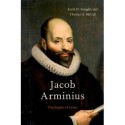

BEN: There is also a strong emphasis early on in the book on what is called the ‘intellectualist’ approach to the nature of God, which is to say that God’s knowledge is given priority over…
Arminianism, as with the overall theology of the early Church fathers, will never die. Calvinism experiences ebb and flow in popularity but Arminianism and other non-Calvinistic theological systems remain constant. I argue, though, that Calvinists…
BEN: Jacob Arminius seems to be a frequently misrepresented theologian, whose works have been neglected, and lack readily accessible translations into English from the Latin and Dutch. To what would you attribute this neglect, and…
Of late there has been an attempt, rightly in my view, to clear away a lot of misconceptions and in fact misrepresentations of Arminian theology, including the misrepresentation of Arminius himself as either a Pelagian…
Arminius’ mild-mannered temperament is noted in the pages of history from both his friends as well as his foes: The personal character of Arminius was irreproachable; and he attracted the esteem and applause of his…
Arminius, in his Dissertation on Romans 7, insists that faith in Christ precedes regeneration: “Besides, even true and living faith in Christ precedes regeneration strictly taken, and consisting of the mortification or death of the…
From my point of view, this post is one of the most significant on this site, for herein all the complaints from anti-Arminian Calvinists is laid to rest once for all. Calvinists, both historic and…

Every single individual alive today, as well as each one in future generations, is graciously invited by God their Creator to join the throng of the redeemed who, writes Jacob Arminius (1559-1609), are incited “to…

The title of this post is a bit controversial in itself: Was Arminius a supralapsarian Calvinist at one time? That is a possibility. I believe that he was a supralapsarian. At least twice in Arminius’…

A gadfly is a “persistent irritating critic; a nuisance.” (link) The late Anglican priest John R.W. Stott comments that the Church needs gadflies to “sting and harry us into action for change,” even though gadflies…
What we must first understand about Arminius’ theological thought process is his positional biblicistic framework. Calvinist theologian Richard A. Muller confesses as much: “Had Arminius been a biblicistic pietist,” i.e., a devotional writer, “promulgating a…
Jacob Arminius may well be one of the most misunderstood figures in Protestant theology. Despite the widespread influence of Arminius’ theology in many churches and denominations, many of both his supporters and his opponents grossly…
Whether or not one adheres to the theology of Jacob Arminius in toto, Arminius’ careful attention to context regarding scriptural interpretation cannot be overemphasized. For example, debating Roman Catholic apologist Adrian Smetius on the subject…
Often historical information regarding sixteenth-century Reformed theologian Jacob Arminius (1559-1609) is weighed down by theological jargon too complicated and uninteresting for the average lay-reader. Too much is assumed by the respective authors and too much…
What do I mean by suggesting that Arminius would have made a good Baptist? This is a curious thought, in light of Arminius’ opposition to the Anabaptists of his day, as well as his own…

Monergism.com hosts articles by various Calvinists, some of which present arguments against Arminianism based on a Calvinistic hermeneutic, and others of which are a pure misrepresentation of Arminian doctrine. Having read “A Short Response to…
Whether or not one adheres to the theology of Jacob Arminius in toto, Arminius’ careful attention to context regarding scriptural interpretation cannot be overemphasized. For example, debating Roman Catholic apologist Adrian Smetius on the subject of…
From the concluding chapter of the recent book, Reconsidering Arminius: Beyond the Reformed and Wesleyan Divide, Dr. Keith D. Stanglin offers his own thoughts on Arminius’ theology in conversation with contemporary theological discourse. This task…

Who was James (or Jacobus) Arminius? His actual name was Jacob Harmenszoon when he was born in Oudewater, Holland in 1559. His father died before his birth and thus Jacob was raised by a widowed…
By far Arminius’ fiercest opponent was Francis Gomarus (1563-1641), a supralapsarian Calvinist whose intent at Leiden was to undermine and challenge Arminius’ broadly Reformed scholastic orthodoxy. Arminius was drawn into debate with Gomarus by obligation,…