Please click on the link to view An Interview with Arminius Scholar Dr. Keith Stanglin.

Please click on the link to view An Interview with Arminius Scholar Dr. Keith Stanglin.

I will be responding to two new books about Arminius at the upcoming annual meeting of the American Academy of Religion. The session is A24-274 Evangelical Studies Group and Open and Relational Theologies Group (joint…

this post is provided by SEA member, Roy Ingle DISPUTATION V ON THE RULE OF RELIGION, THE WORD OF GOD, AND THE SCRIPTURES IN PARTICULAR I. As religion is the duty of man towards God,…
This post was provided by SEA member, Roy Ingle DISPUTATION XX ON THE ATTRIBUTES OF GOD WHICH COME TO BE CONSIDERED UNDER HIS WILL AND, FIRST, ON THOSE WHICH HAVE AN ANALOGY TO THE AFFECTIONS…

Date Remonstrant Anglican/Methodist Baptist 1600’s James Arminius (1560-1609) Theologian and leader of the opposition of Calvinism in Amsterdam and Leiden Jan Uytenbogaert remonstrant led the meeting that produced the 5 Points of the Remonstrants – 1610 Simon Episcopius (1583-1643) –…

C.S. Lewis is one of the most widely read Christian writers of the last 100 years. Although he doesn’t seem to have ever directly referenced Arminius or Wesley in his writings, his theology is nonetheless…

Dr Jerry Sutton, Academic Dean of Midwestern Baptist Theological Seminary in Kansas City, weighs in with a fair and balanced assessment of Arminianism from a Southern Baptist perspective: “James Arminius and the Dutch Reformation,” Midwestern…

A version of this article has appeared in Trinity Journal 33 (2012) 3-18. Please click on the link to view John Mark Hicks, “Classic Arminianism and Open Theism: A Substantial Difference in Their Theologies of Providence”.
Please click on the link to view John Mark Hicks, “The Theology of Grace in the Thought of Jacobus Arminius and Philip van Limborch: A Study in the Development of Seventeenth Century Dutch Arminianism” (Doctoral dissertation; Westminster Theological…
This is the fourth video in a fantastic series of lectures by Dr. Keith Stanglin and Dr. Thomas McCall on who Jacob Arminius was, and what he believed. McCall and Stranglin wrote the book Jacob…

This is the third video in a fantastic series of lectures by Dr. Keith Stanglin and Dr. Thomas McCall on who Jacob Arminius was, and what he believed. McCall and Stranglin wrote the book Jacob…
This is the second video in a fantastic series of lectures by Dr. Keith Stanglin and Dr. Thomas McCall on who Jacob Arminius was, and what he believed. McCall and Stranglin wrote the book Jacob…
This is the first video in a fantastic series of lectures by Dr. Keith Stanglin and Dr. Thomas McCall on who Jacob Arminius was, and what he believed. McCall and Stranglin wrote the book Jacob…

Please click on the attachment to view James Arminius, “A Declaration of the Sentiments of Arminius”. This treatise is an accessible introduction to Arminius’ thought. It treats predestination, divine providence, the freedom of the will,…
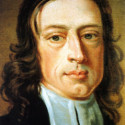
Please click on the attachment to view Robert Rakestraw. “John Wesley as a Theologian of Grace,” published in Journal of the Evangelical Theological Society 27:2 (June 1984): 193-203.

A comprehensive Arminian catechism from 1883. Please click on the link to view William Burt Pope, A Higher Catechism of Theology.
Please click on the attachment to view Mark A. Ellis, “Introduction to The Arminian Confession of 1621“, which is Ellis’ introduction to his scholarly translation of the historic confession (Mark A. Ellis [trans. and ed.],…
Please click on the attachment to view: John M. Wiley, “Distinguishing Classical Arminianism from Semi-Pelagianism: An Attempt to Liberate Jacobus Arminius from Fallacious Claims and Popular Misconceptions about His Theology.” This is a graduate paper…
The purpose of this paper is to delineate Arminius’ view on regeneration. The Arminian view on regeneration has frequently been mischaracterized, both by Calvinistic opponents, as well as adherents to his views. His view is…
Calvinism posits that in God there exists a distinction of wills; the will of revelation and the will of sovereignty (i.e. the revealed will and the secret or sovereign will). However, Arminians posit that the problem with this theory of two wills is that when one is put into effect then the other is put to naught. Let me make an example of this.
It is often said by Calvinists in Genesis 50:20 that God has commanded that it is unlawful to do ill to one’s family (in this instance, kidnapping). This is said to be the revealed will of God. And yet, allegedly in this Gen. 50:20 circumstance, Calvinists believe that you can also discern the operation of the sovereign or secret will of God working through the sin of Joseph’s brothers to a good and godly end.