A Latin expression known as ad fontes translates, literally, “to the fountains,” interpreted as “to the sources,” a command to read primary sources. Dr. Mark A. Ellis, a Calvinist pastor of a Calvinistic Baptist church,…
Arminian Heritage
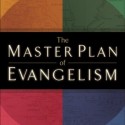
Justin Taylor, “A 20th Century Classic: ‘The Master Plan of Evangelism'”
Please click on the link to view Justin Taylor, “A 20th Century Classic: ‘The Master Plan of Evangelism’”. This is a postive book review. In addition to drawing attention to an important work by an Arminian…
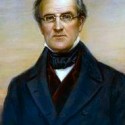
Degrees of Union with God’s Will
There are different degrees of union with the Divine Will, some of which it may be proper to notice and discriminate. 1. Union With God in Submission The first degree may be described as union…
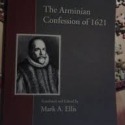
The Arminian Confession of 1621
The Remonstrants constructed their Arminian Confession of 1621 in the brief years following the conclusion of the Synod of Dort. The translator of the work below, Dr. Mark A. Ellis, states: “They intended it as…

The Post-Reformation Digital Library
Please click on the link to access The Post-Reformation Digital Library website. A description from the website: “The Post-Reformation Digital Library (PRDL) is a select database of digital books relating to the development of theology and…
Roger Olson, “An Arminian-Anabaptist Response to ‘A Church for Exiles’ by Carl R. Trueman”
The August, 2014 issue of the journal First Things (online) contains an article by Westminster Theological Seminary church history professor Carl R. Trueman entitled “A Church for Exiles: Why Reformed Christianity Provides the Best Basis…
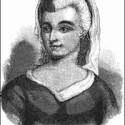
Susanna Wesley on Predestination
The following is from a letter written by Susanna Wesley to her son John. This quotation has been taken from John Kirk, The Mother of the Wesleys: A Biography (London: Henry James Tresidder, 1864), 284-86. Explanatory…

New Book Arguing for Certain Influence on Arminius that Suggests He Eventually Rejected Middle Knowledge
Something for Arminius Geeks By Dr. Roger Olson Our number is few and I’m not even sure I’m one. Here I use the word “geek” in a non-pejorative way—as someone peculiarly (to others) interested in…

Some Informal Comments on Matthew Pinson’s Denial that Arminianism is Synergistic
by Brian Abasciano Here are some (now) edited and expanded comments I made in SEA’s private discussion group on Dr. J. Matthew Pinson’s article, “Are Arminians Necessarily Synergists?”, which argues that Arminianism is not really synergistic, but…
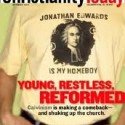
Roger Olson, “Is Arminianism ‘Reformed?'”
A minor controversy exists among Arminian scholars (and some non-Arminian Reformed scholars have chimed in) about whether classical Arminianism can legitimately lay claim to being part of the Reformed theological tradition. The question is this:…

Arminius on the use of the moral law
This information is provided by SEA member, Roy Ingle IV. The uses of the moral law are various, according to the different conditions of man. (1.) The primary use, and that which was of itself…
Why I Am An Arminian
Part III: History
Many Calvinists claim that they represent historical orthodoxy. However, I believe that the opposite is true. In this post I intend to traverse Christian history and tease out, on a very basic and incomplete level,…

Roger Olson, “Was Arminius an Arminian? (Report on A Vigorous Discussion)”
Yesterday (Nov. 24, 2013) I participated in a vigorous and invigorating panel discussion (followed by questions from the scholarly audience) about Arminius. The focus of the discussion was two new books about Arminius. (I have…
Roger Olson, “My Response to Two Books about Arminius”
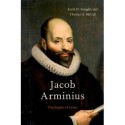
Response to W. Stephen Gunter, Arminius and His Declaration of Sentiments and Keith D. Stanglin and Thomas H. McCall, Jacob Arminius: Theologian of Grace Roger E. Olson These two books are significant contributions to what I call the…

An Interesting Comment on Roger Olson’s Call for More Attention to Theology among Arminians
This comment was left by someone identified as Will at Roger Olson’s blog on his post, “Needed: Robust Arminian Theology for Lay People (Especially Youth)”: I completely agree. I just want to say thanks Roger…

Roger Olson, “Needed: Robust Arminian Theology for Lay People (Especially Youth)”
As most people who come here know, a “new Calvinism” movement (some prefer to call it “neo-Puritanism” and others call it the “Young, Restless, Reformed” movement is spreading like wildfire among evangelical Christians, especially young…

An Interview with Arminius Scholar Dr. Keith Stanglin
Please click on the link to view An Interview with Arminius Scholar Dr. Keith Stanglin.
Roger Olson, “Must One Agree with Arminius to be Arminian?”
I will be responding to two new books about Arminius at the upcoming annual meeting of the American Academy of Religion. The session is A24-274 Evangelical Studies Group and Open and Relational Theologies Group (joint…
Arminius on the Word of God
this post is provided by SEA member, Roy Ingle DISPUTATION V ON THE RULE OF RELIGION, THE WORD OF GOD, AND THE SCRIPTURES IN PARTICULAR I. As religion is the duty of man towards God,…
Arminius on the Attributes of God From the Viewpoint of His Will
This post was provided by SEA member, Roy Ingle DISPUTATION XX ON THE ATTRIBUTES OF GOD WHICH COME TO BE CONSIDERED UNDER HIS WILL AND, FIRST, ON THOSE WHICH HAVE AN ANALOGY TO THE AFFECTIONS…