Abstract: When John Wesley became an evangelical Christian in 1738, his new understanding of justification by faith alone was directly influenced by Martin Luther, passed down to him through the Moravians. This article explores the…


Abstract: When John Wesley became an evangelical Christian in 1738, his new understanding of justification by faith alone was directly influenced by Martin Luther, passed down to him through the Moravians. This article explores the…
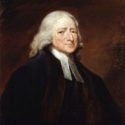
Cowman Lecture, 2021 Seoul Theological University, South Korea Abstract: The doctrine of justification is usually associated with John Wesley after his evangelical conversion in 1738. Few people know what Wesley believed about justification before that…

This article is part of a series on the Assembly of God Statement of Fundamental Truths. Please click on the link to view Allen Tennison, “What We Believe About … Salvation.”

The following is from a post authored by Eric Landstrom from the Society of Evangelical Arminians Private Facebook Group back on March 5th, 2021, discussing the Southern Baptist distinction of once saved, always saved (OSAS)…

Please click on the link to view this devotional by A. W. Tozer: “Infinite Equity.”
“The Spirit himself beareth witness with our spirit, that we are the children of God” (Romans 8:16). That the Old Testament saints were justified by faith is clearly stated in Hebrews 11. While the faith…
The current idea abroad in many circles that the believer doesn’t have the indwelling presence of the Holy Spirit has led many to profess to be real Christians without His presence and to seek Him…
[The following is a sermon from The Works of the Reverend John Fletcher, 4 vols. (1833; rpt. Salem, OH: Schmul Publishers, 1974), 4:95-117. The sermon is in four parts and due to the length only…

In order to answer some charges that are leveled against us concerning the disciples and Pentecost, we herein give a brief account of our position, one we believe to be true to the Bible. It…
What manner of man is he who, while describing his spiritual state, says, “I am carnal, sold under sin”? Can he be classified as one who is born again? “For, that which I do,” says…

An appeal for men to be saved is near to the heart of Wesleyan Methodism. W.B. Fitzgerald summarized Methodism with for “alls”: All need to be saved. All can be saved. All can know they…

On his website, Arminian Perspectives, Ben Henshaw has a questions page at which he answers questions about Arminianism and Calvinism that visitors to his site pose in the comment section of the page. The following is a…

“Salvation is from our side a choice; from the divine side it is a seizing upon, an apprehending, a conquest by the Most High God. Our accepting and willing are reactions rather than actions.” -A.W.…

If you cannot see the player above follow this link: Imputed Righteousness This is a lecture by Dr. Vic Reasoner which presents the orthodox Wesleyan position on the imputation of Christ’s righteousness in justification. Dr.…

THE NINE QUESTIONS: NINE OPPOSITE QUESTIONS 1. Which is first, Election, or Faith Truly Foreseen, so that God elected his people according to faith foreseen? 1. Is the decree “for bestowing Faith on any one,”…

Please click on the link to view William Lane Craig, The Atonement (Elements in the Philosophy of Religion; Cambridge: Cambridge University Press, 2018) (doi:10.1017/9781108558020). Here is an abstract: The Atonement offers in a concise compass an…
BEN: When the Gospel of Matthew presents us with Jesus saying that he is submitting to baptism to ‘fulfill all righteousness’ he is of course talking about the righteousness that comes from obedience to the…
BEN: Your discussion of open theism is interesting, and I wonder if since your book was published (2006), you’ve settled the matter in your mind. For my part, I have rejected open theism. I think…

Are we justified (made right with God) by faith alone? Or are we saved by faith, plus something else? Like maybe baptism, worshipping on a certain day, not doing certain things and/or being sure to…
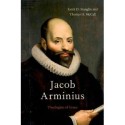
BEN: What Arminius has to say about final justification seems to exclude the idea that works of piety and charity have anything to do with it (rather he opts for simple persevering in the faith…