Editor’s Note: Mako Nagasawa does not formally identify as Arminian, but his essay is a good representation of the narrative understanding of election shared by many Arminians. Romans 9 – 11 is sometimes taken as…


Editor’s Note: Mako Nagasawa does not formally identify as Arminian, but his essay is a good representation of the narrative understanding of election shared by many Arminians. Romans 9 – 11 is sometimes taken as…

This is part of a series of posts on Romans. The main focus of this series will be chapters 9-11 of the letter. These chapters, particularly chapter 9, have been interpreted in various different ways.…

This is part of a series of posts on Romans. The main focus of this series will be chapters 9-11 of the letter. These chapters, particularly chapter 9, have been interpreted in various different ways.…
All Scripture quotations are from the 1901 American Standard Version unless otherwise noted. Introduction Romans 11 is one of the most important chapters in the New Testament regarding the doctrine of election, Israel and…
Please click on the link to view Hank Hanegraaff, “How Could Pharaoh Be Morally Responsible if God Hardened His Heart?”.

Dr. Brown opens up the Hebrew Bible in order to understand what really happened with the hardening of Pharaoh’s heart in Exodus. The video may also be found on YouTube here.

I posted this argument in SEA’s private discussion group a couple years ago. Given that format, it is written less formally. I have edited it only a little for posting here. The main argument is followed…
Please click on the link to view A. Philip Brown II, “Does God Harden People’s Hearts?” God’s Revivalist and Bible Advocate 121.3 (April 2009), 14.

Please see below or click on the attachment to view Charles Edward White, “Does God Call All the Shots?” Light and Life (July/August 2003), pp. 29-31. Does God Call All the Shots? By Charles Edward White …

Please click on the attachment to view Charles Edward White, “John Calvin’s five-point misunderstanding of Romans 9: An Intertextual Analysis,” Wesleyan Theological Journal 41 (Fall 2006) 28-50.
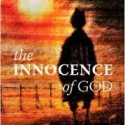
In Udo Middelmann’s The Innocence of God, he grants us biblical evidence advocating the truth that God is innocent of the tragedies and evil experienced by and among fallen human beings. God has neither decreed…
Scripture quotations are from the English Majority Text Version (EMTV) unless noted otherwise. Does God Harden Hearts? (Still addressing verses 17 and 18): 9:17 For the Scripture says to Pharaoh, “For this very purpose…
Scripture quotations are from the English Majority Text Version (EMTV) unless noted otherwise. Introduction Romans 9 is a very controversial chapter, but it shouldn’t be. All through the Word of God we learn about all…

Please click on the link to view Craig Keener, “Did God love the Egyptians?”
Please click on the link to view “Early Church Fathers on the Freedom of the Will and Romans 9.” The early church resoundingly affirmed the liberty of the will, in spite of the well-known philosophical option…

Please click on the link to view Klyne Snodgrass, “A Hermeneutics of Hearing Informed by the Parables with Special Reference to Mark 4,” Bulletin for Biblical Research 14.1 (2004) 59-79. Here is an abstract of the article:…
Thomas Schreiner reviewed my book, Paul’s Use of the Old Testament in Romans 9.10–18: An Intertextual and Theological Exegesis for the online theological journal Themelios. His review may be found here. This is the response…
Click the link below to see John F. Parkinson’s solid and concise interpretation of Romans 9 from a non-Calvinist perspective. Please note that while Mr. Parkinson seems to approach Romans 11 from a pre-trib dispensational…

We received a question through our public website about 2 Sam 24:1 and 1 Chron 21:1 and the inciting of David to take the sinful census. Here is the exchange between one of our members…

This article is posted with permission from the publisher, the scholarly journal Bibliotheca Sacra. Please click on the attachment to view Robert B. Chisholm Jr., “Divine Hardening in the Old Testament”, Bibliotheca Sacra 153 (Oct.–Dec. 1996) 410-34.