Christian theology teaches the doctrine of prevenient grace, which briefly stated means this, that before a man can seek God, God must first have sought the man. Before a sinful man can think a right…
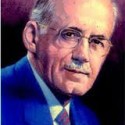

Christian theology teaches the doctrine of prevenient grace, which briefly stated means this, that before a man can seek God, God must first have sought the man. Before a sinful man can think a right…

Click on the link to view J. W. Wartick, “A Denial of Theological Determinism”.

Please click on the link to view An Interview with Arminius Scholar Dr. Keith Stanglin.

I will be responding to two new books about Arminius at the upcoming annual meeting of the American Academy of Religion. The session is A24-274 Evangelical Studies Group and Open and Relational Theologies Group (joint…

The following is from Donald C. Stamps, Life in the Spirit Study Bible, pp. 1962-63: The Greek words for apostasy appear twice in the NT in the noun form apostasia, (Acts 21:21; 2 Thes 2:3)…

This post was provided by SEA member Roy Ingle Was reading a bit today from a Wesleyan scholar and he noted three ways we see prevenient grace in the world today. They are: Anthropology –…

[Taken from http://theosophical.wordpress.com/2012/01/18/against-theological-determinism-compatibilism/. Please note: The edition of Philosophia Christi referred to is no longer the latest edition. We would also qualify the author’s definition of a “theological determinist” from being merely that God’s sovereignty extends meticulously…

Even though this video does not consider Arminian/Calvinist issues specifically, we include it here because the gospel is fundamental to our identity as evangelicals and to highlight how Arminians and Calvinists have the same basic…

I think it is fair to say that our contemporary Christian subculture is saturated in a Reformed theology. This isn’t necessarily bad. Many of these voices hail from brilliant scholars whose knowledge and wisdom adds…

Security in Christ (the S in FACTS) [Cf. Article 5 of the 5 Articles of the Remonstrance] At base, “Security in Christ” means that a person’s salvation is secure as long as he is in Christ,…

Conditional Election (the C in FACTS) [Cf. Article 1 of the 5 Articles of the Remonstrance] There are two main views of what the Bible teaches concerning the concept of election unto salvation: that it is…

Freed to Believe by God’s Grace (the F in FACTS) [Cf. Articles 3-4 of the 5 Articles of the Remonstrance] As we have noted, because human beings are fallen and sinful, they are not able to…

Atonement for All (the A in FACTS) [Cf. Article 2 of the 5 Articles of the Remonstrance] As observed above, due to total depravity, no one can be saved unless God takes the initiative. The good news…
This week we are devoting each day to presenting one of the 5 points of Arminainism as represented by the acronym FACTS. These points are loosely derived from the Articles of Remonstrance, but also have…
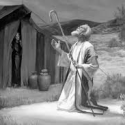
The doctrine of election causes a lot of confusion for a lot of Christians. So much so, that we have two major opposing positions on what election is and how it works. Calvinism represents one…

“Come to me, all who labor and are heavy laden, and I will give you rest. Take my yoke upon you, and learn from me, for I am gentle and lowly in heart, and you…

This one is Isaiah 45:7: “I form the light and create darkness. I make peace and create evil: I the Lord do all these things.” This is a verse that many people do not know…

This post will be an attempt to add some detail to earlier comments about problems reconciling Calvinism and total depravity using John Hendryx’s post as an example (here). To my knowledge, it’s a new argument…

by Brian Abasciano I just wanted to share some brief notes about my article, “The FACTS of Salvation: A Summary of Arminian Theology/the Biblical Doctrines of Grace,” recently published here at the website of the Society…

The FACTS of Salvation: A Summary of Arminian Theology/the Biblical Doctrines of Grace By Brian Abasciano (For a pdf file of the present article, see here.) The distinctive tenets of Arminian theology may…